
Point Park
Inspired by History
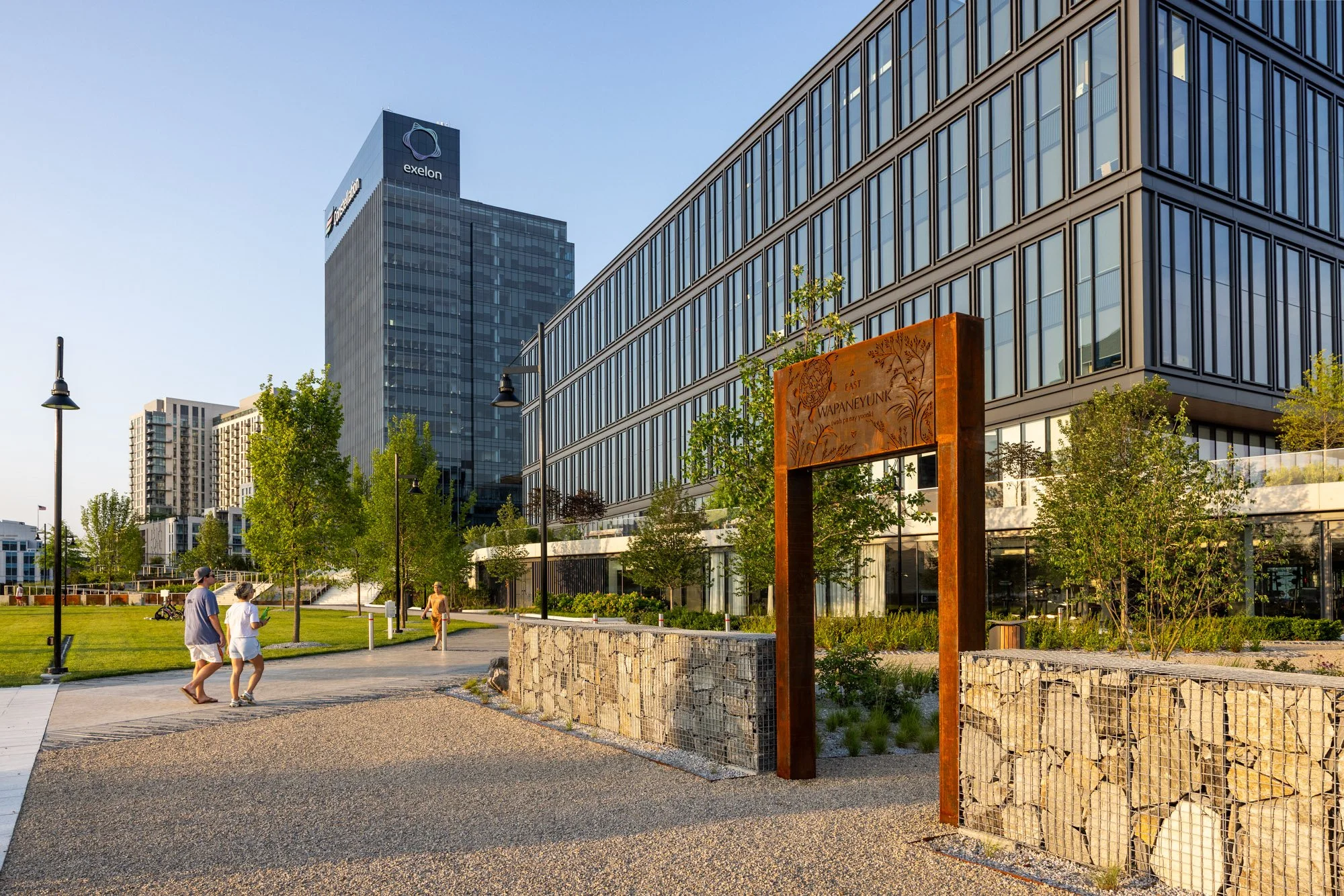
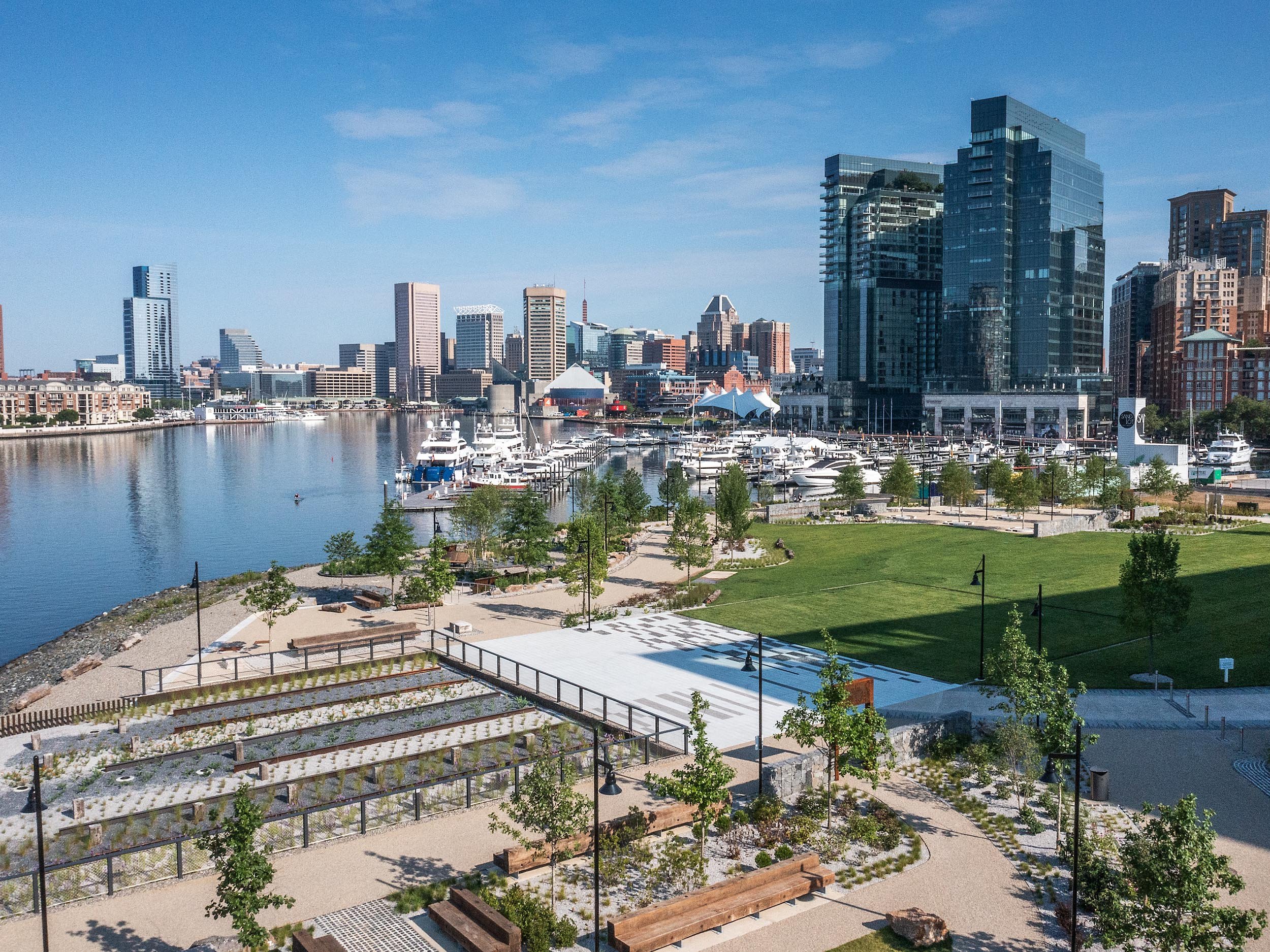
Thoughtfully designed to connect people with nature, history, culture, and each other, the 4.5-acre Point Park is the culmination of more than 20 years of master planning and development with the City of Baltimore and local communities. Point Park offers visitors an opportunity to learn the significance of the land upon which they stand as layers of history converge, telling stories of resilience, adaptation, and transformation. The Park stands as a testament to the intricate relationship between progress and preservation, where the past and present coexist in harmony.
For 140 years, the peninsula now known as Harbor Point was the site of Allied Signal’s Baltimore Chrome Works facility. At Point Park, trees hold the place where steel columns once stood; gates symbolically mark the entrances to buildings that now only exist in photographs; timber benches and steel beams recall the heavy industry that once shaped the area.
Long before its industrial use, the land was part of the Chesapeake Bay watershed, historically inhabited and stewarded by Indigenous communities. With the support of T. Rowe Price and the Waterfront Partnership of Baltimore and in collaboration with the Baltimore American Indian Center and other Native American consultants, Point Park features educational signage that shares the Indigenous history of the land and helps visitors connect with its roots.
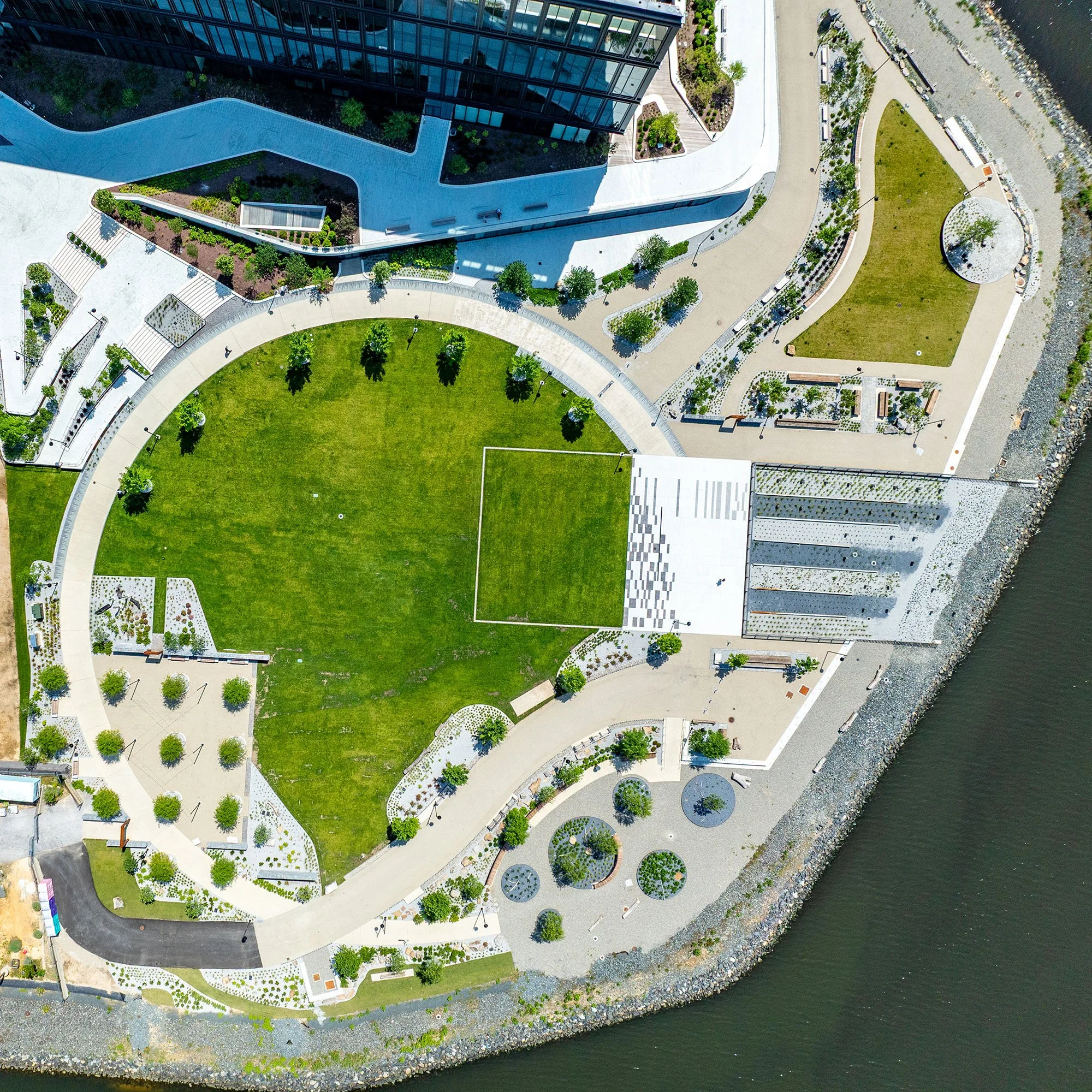
Point Park Highlights
1. Main Lawn
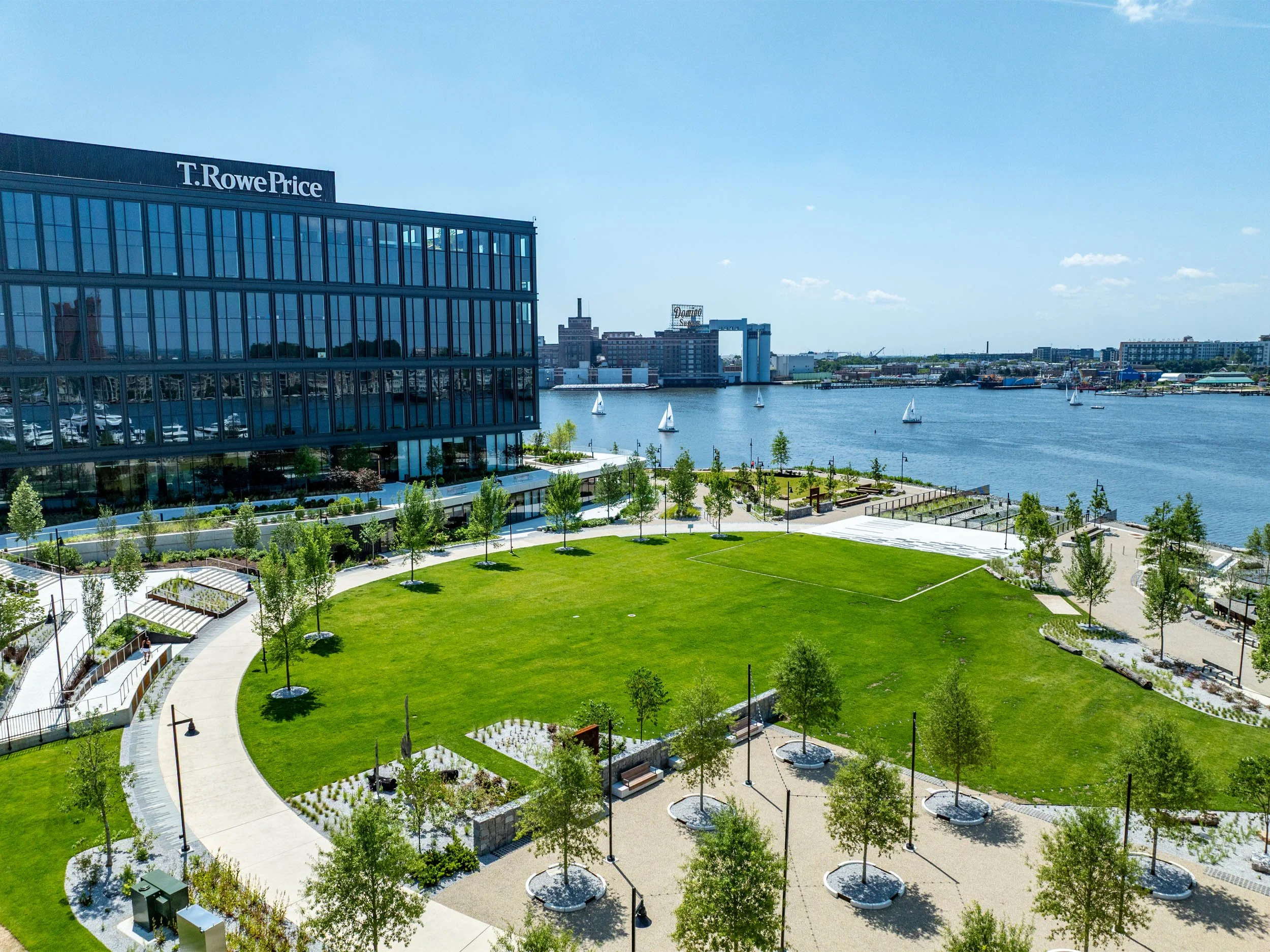
The expansive open green space will be home to a range of programmatic events, as well as serving as the “waterfront yard” for residents, workers, and guests alike. The main lawn delivers on Point Park’s goal to be the go-to destination for open space activation along Baltimore’s harbor.
2. Grove
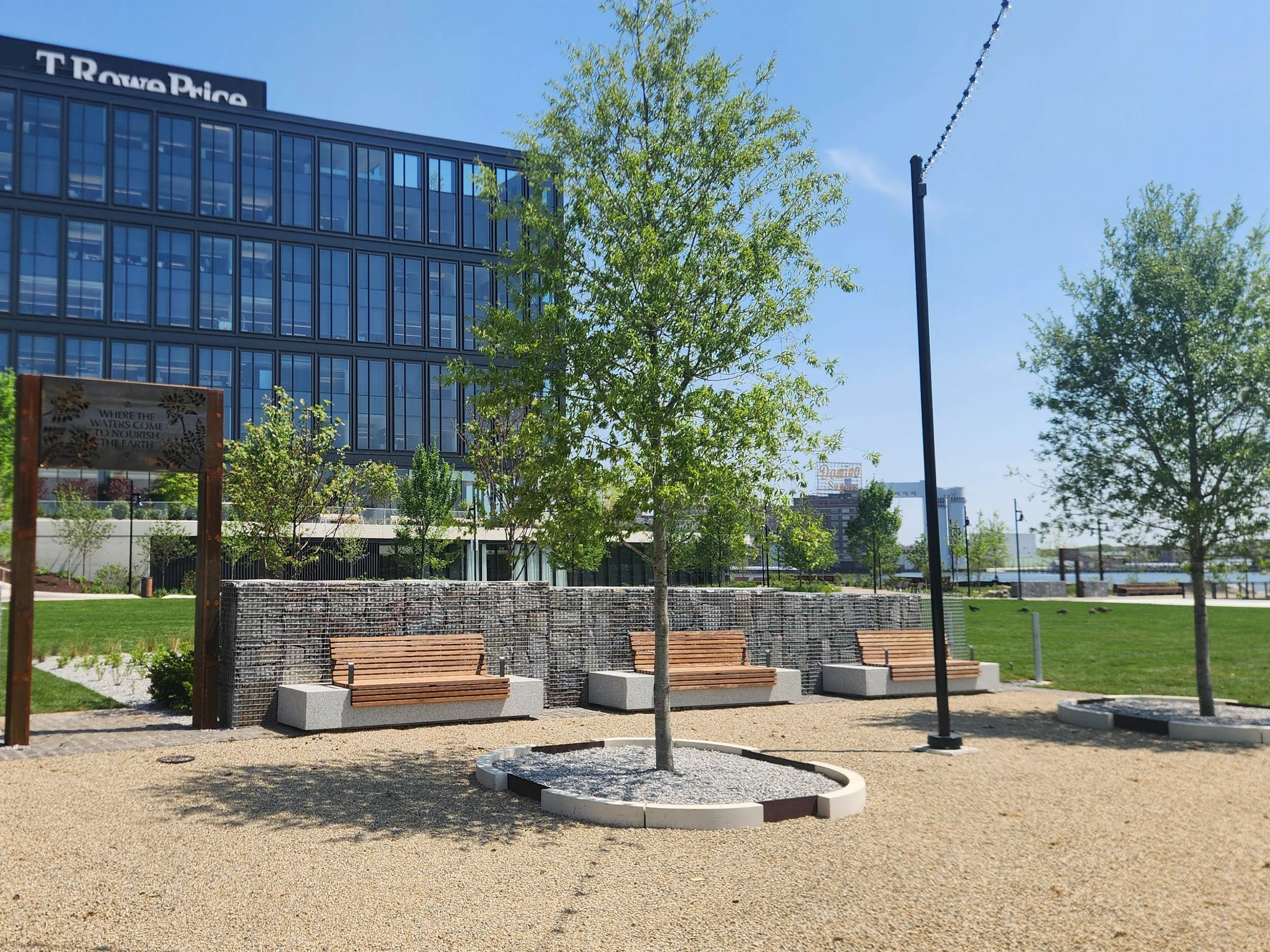
The grove interprets what was once the main plant of the Baltimore Chrome Works site. The grid work of concrete foundations that once carried the massive processing facility is represented by rows of trees. Concrete walls and an interpretive panel tell the story of a once-proud industrial past and recast that narrative in a contemporary setting.
3. Covered Slip
A depressed plate of native plantings marks the footprint of the slip that once ferried goods to and from Baltimore Chrome Works. The location from which ships once distributed the products of this site to the rest of the world is now a symbol of a city’s evolution from one of industrial might to environmental pioneer.
4. Steel Gates
Three tall steel gates identify the cardinal directions and their cultural meanings, in both English and Algonkian dialects. Etched into Corten steel panels on each gate are illustrations of flora and fauna Indigenous to this place, which are also associated with each of the respective directions.
5. Waterfront Promenade
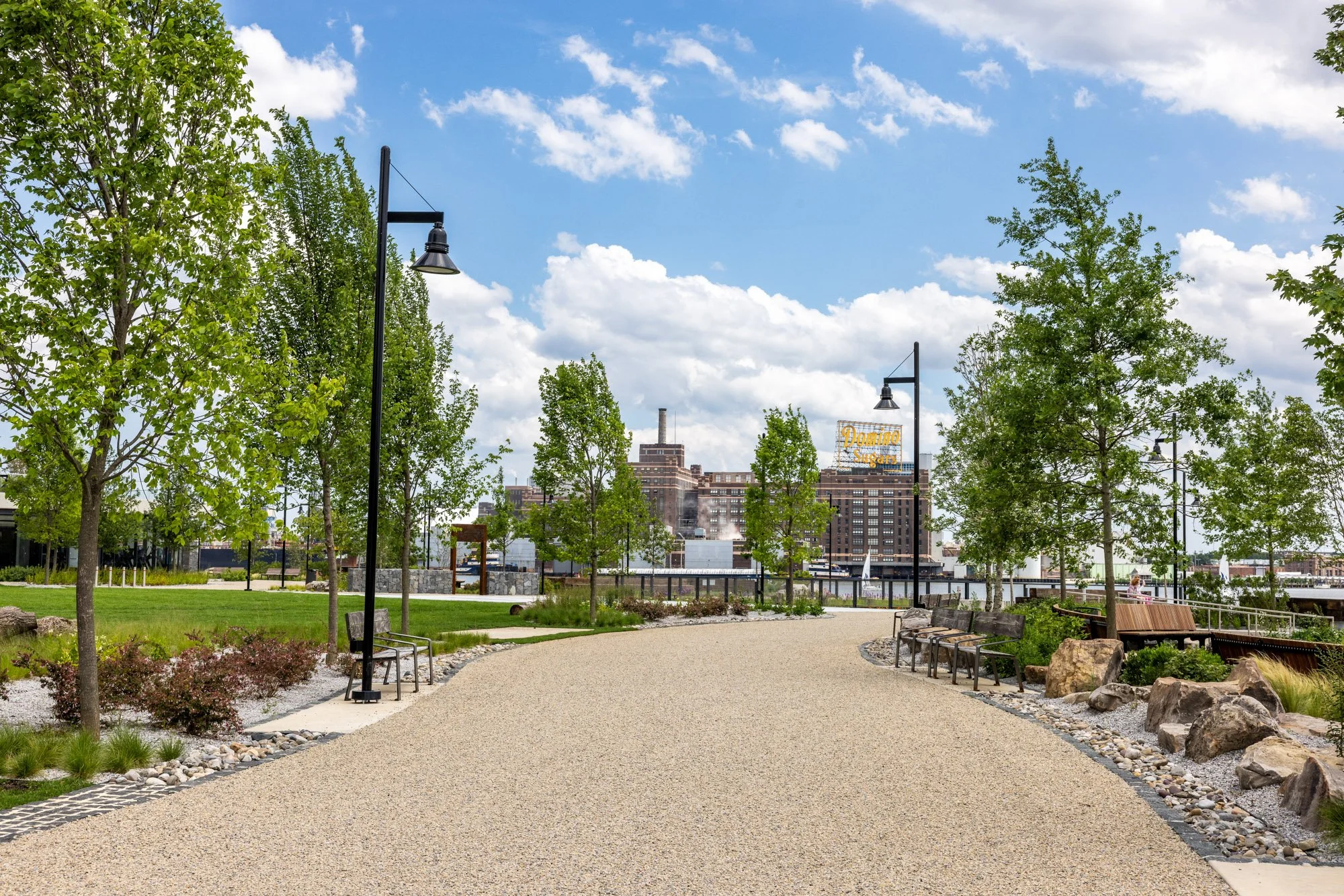
Point Park is the first location in the city to turn away from the hard-edged promenade environment that has to date dominated the constructed shoreline of Baltimore’s harbor. Brick paving yields to the soft texture and audible crunch of gravel underfoot. Plants, trees, and boulders have been carefully placed to conjure images of the shoreline that predated the city’s founding.